Tattaglia Family
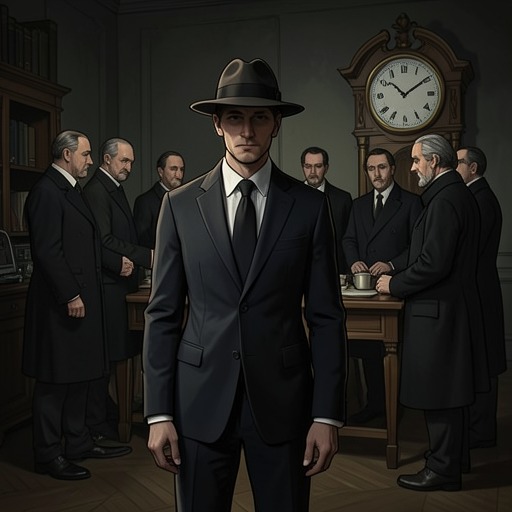
The GodfatherThe Tattaglia Family is one of the principal organized-crime powers opposed to the Corleone Family. Its authority rests especially on prostitution, nightclubs, entertainment placement, and coercive control, while its alliance with Virgil Sollozzo brings narcotics, political protection, and direct confrontation with Vito Corleone. The family’s challenge nearly succeeds, but the war it helps provoke damages its own commercial position and reveals that its apparent power depends on stronger, more strategic alliances.
Nature and Structure
The Tattaglia Family’s main business is prostitution, and it controls most of the nightclubs in the United States. Through those clubs it can place performers anywhere in the country, while also using strong-arm tactics to seize promising singers and comics or force its way into record companies. Its income is therefore drawn from both the direct exploitation of women and from a broader entertainment network in which nightlife, talent, licensing, and intimidation overlap.
Phillip Tattaglia heads the family, but the organization is not presented as an extension of a commanding personal vision comparable to Vito Corleone’s. Tattaglia is a sixty-year-old dandy and woman-chaser, and the other family leaders hold him in slight contempt. He is blamed for allowing Virgil Sollozzo to dominate him and for helping create the upheaval that interrupts the ordinary business of the New York families. His complaints about laundry bills, unreliable prostitutes, disloyal pimps, and liquor-license authorities make the family’s operation appear simultaneously profitable and plagued by the costs and instability of its own trade.
The family’s internal weakness is sharpened by the nature of its labor force. Young men of Sicilian blood may accept murder but regard trafficking in and abusing women as beneath their honor, leaving Phillip Tattaglia dependent on workers he considers lazy, unstable, treacherous, or dishonest. His anger is directed not only at employees but also at officials who control liquor licenses for his nightclubs and cabarets; he claims that the bribes paid to those guardians of official seals have consumed enormous profits.
Alliance with Sollozzo
The Tattaglia Family vouches for Virgil Sollozzo, known as the Turk, when he seeks financial and legal assistance for a narcotics operation. Sollozzo has contacts in Turkey, a processing plant in Sicily, and the expertise to convert the product between morphine and heroin as circumstances require. He needs capital and protection for the vulnerable stages of bringing narcotics into the United States and distributing them there. Because the Tattaglia Family stands behind him, its interests are implicated even before open hostilities begin.
Sollozzo’s criminal record makes him unable to obtain immunity by testifying, while his family responsibilities make him willing to accept punishment if his American wife and three children are provided for. The Tattaglia connection consequently gives the narcotics proposal credibility, but it also ties the family to a man whose methods and ambitions threaten the established balance of power. When Sollozzo explains that the Tattaglias will receive something from his share because he needs their help in operations, the arrangement appears less like a simple loan than a coalition seeking entry into the Corleone Family’s territory and influence.
The central dispute is not merely financial. Sollozzo offers Vito Corleone a large percentage in return for financing and legal protection, but Vito refuses to risk the family’s political relationships by entering narcotics. The Tattaglia Family’s sponsorship thus becomes part of a strategic challenge to the older order: a new business, backed by an established family, attempts to convert capital and protection into a wider reorganization of criminal power.
Role in the Five Families War
After Michael Corleone kills Virgil Sollozzo and Captain McCluskey, New York City police institutions launch massive raids and suspend gambling, prostitution, and other unlawful business activities. The Tattaglia Family is among the families affected by the resulting paralysis, but it is also part of the political pressure surrounding the murders. When an emissary from the Families asks whether the Corleone Family will surrender the murderer and receives a refusal, violence follows: a bomb is thrown at the Corleone Family mall in Long Beach, and two Corleone button men are killed while eating in a Greenwich Village restaurant. The Five Families War of 1946 begins in that atmosphere of retaliation.
The later war of 1947, in which the Corleone Family faces the combined Five Families, proves expensive for both sides. Police pressure prevents the usual political protection from functioning effectively, and the damage falls heavily on the gambling operations that finance the Corleone organization. The Tattaglia Family therefore helps initiate a conflict whose costs exceed any immediate advantage. The war transforms private vendetta into a broad struggle over territory, revenue, legitimacy, and survival.
The family’s strategic position is also complicated by Emilio Barzini, its closest ally. Barzini supports the Tattaglias with money and influence, and his network extends through Brooklyn, Queens, Staten Island, the Bronx, Westchester, Cleveland, the West Coast, Las Vegas, Reno, Miami Beach, Cuba, and even Sicily. He is involved in gambling, prostitution, strong-arm work, narcotics, and rumored Wall Street interests. His support makes the Tattaglia Family formidable, but it also places Phillip Tattaglia beneath the influence of a colder and more modern rival who seeks to replace Vito Corleone as the country’s most powerful and respected Mafia leader.
Conflict with Corleone Power
The Tattaglia Family’s opposition to Vito Corleone contrasts with the system of assistance through which the Corleone organization builds loyalty. Vito helps poor neighborhood residents obtain relief, jobs, loans, or intervention against landlords, and he extends that influence into elections by advising voters and supporting talented young men who later become lawyers, assistant district attorneys, and judges. His power is therefore presented as a mixture of protection, personal gratitude, political access, and future institutional influence.
The Tattaglia model is more visibly commercial and coercive. Its principal revenue comes from prostitution and its authority is expressed through control of clubs, performers, licenses, and physical intimidation. Yet the distinction between the two organizations is not a simple opposition between lawful benevolence and criminal exploitation. Vito’s aid creates debts redeemable by future service, while the Tattaglia Family’s businesses depend on relationships with officials, entertainers, and allied families. Both operate as alternative systems of power, but they cultivate different forms of dependence and different public images.
Vito’s wider peace-making project further isolates the Tattaglia challenge. By 1939 he has negotiated a working agreement among major underworld organizations across the United States, preserving each group’s internal authority while establishing spheres of influence and peace. His political ideal is that the criminal world should manage its own affairs without outside interference. At the peace conference, he renounces vengeance for his dead son and promises that no member of his family will be attacked without just cause and extreme provocation, while insisting that bringing Michael home safely remains his own affair. The Tattaglia Family’s earlier attack is thus absorbed into a settlement designed to restore commercial order without erasing the underlying struggle for supremacy.
Significance and Position in the Power System
The Tattaglia Family demonstrates how organized crime functions as a rival form of governance: it controls territory, extracts revenue, disciplines workers, negotiates with other authorities, and uses violence when ordinary arrangements fail. Its conflict with the Corleone Family shows that violence is not an isolated act but an organizational resource whose costs spread through police raids, interrupted commerce, damaged alliances, and pressure on families far beyond the original dispute.
Its decline in authority is foreshadowed by the contrast between Phillip Tattaglia and Emilio Barzini. Tattaglia represents an exposed, unstable, prostitution-based enterprise whose leader is easily manipulated by Sollozzo. Barzini represents a more sophisticated, diversified, and geographically expansive model, one capable of linking narcotics, gambling, political influence, and emerging opportunities in Las Vegas and Reno. The Tattaglia Family remains a major power, but the narrative makes clear that it is not the strongest intelligence within its own alliance.
The family’s importance therefore lies not only in the crimes attributed to it but in the political structure it helps reveal. It stands at the junction of business, protection, corruption, entertainment, and family loyalty. Its alliance with Sollozzo ignites a struggle that forces every organization to clarify its interests, while its dependence on Barzini exposes the limits of nominal independence. Against Vito Corleone’s claim that the underworld must govern itself as its own world, the Tattaglia Family shows how quickly that world becomes entangled with police power, public reputation, interstate commerce, and the ambitions of more modern competitors.